
// learn · free guides from the HandwrittenCode team
read before you revise
Learn
Short, practical guides on which language to start with, how to revise, and what placements actually ask.
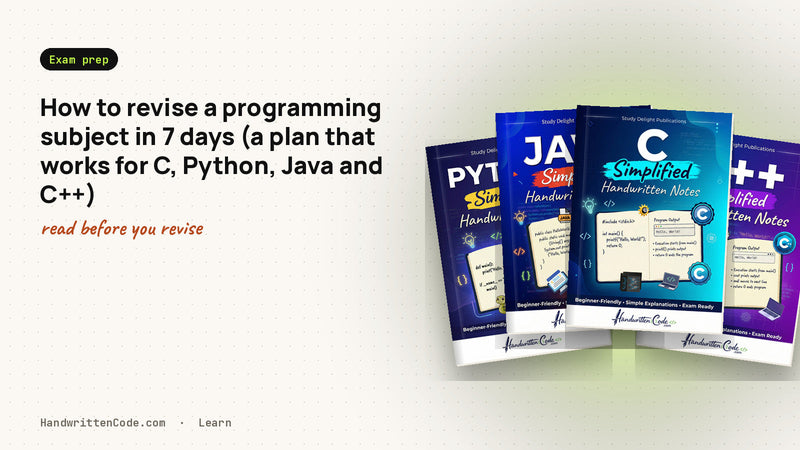
How to revise a programming subject in 7 days (a plan that works for C, Python, Java and C++)
One week, one programming paper. This is the day-by-day plan we give students who message us the week before the exam — with what to skip...

Best books for first-year CSE: what to buy, what to borrow, what to skip
First year has four or five subjects that matter for the rest of the degree. Here is a short, honest list of what to buy for each — inclu...
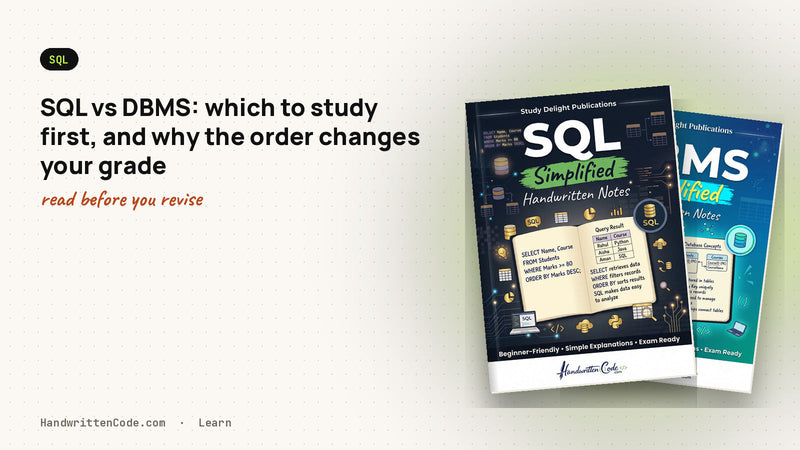
SQL vs DBMS: which to study first, and why the order changes your grade
SQL is the language; DBMS is the theory of what the language runs on. Most students learn them in the wrong order. Here is the order that...
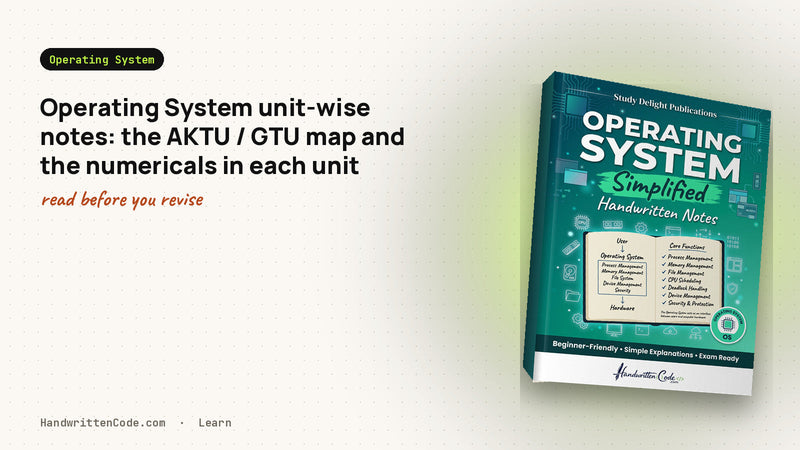
Operating System unit-wise notes: the AKTU / GTU map and the numericals in each unit
OS is five units nearly everywhere. Here is what each unit asks, which numericals it hides, and how to split your revision so the schedul...
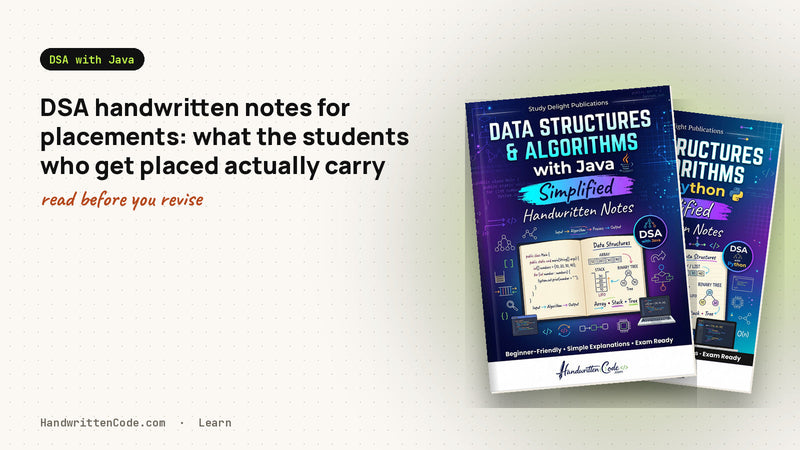
DSA handwritten notes for placements: what the students who get placed actually carry
What good placement DSA notes look like, built from the questions service-company rounds actually ask. It is shorter than you think, and ...
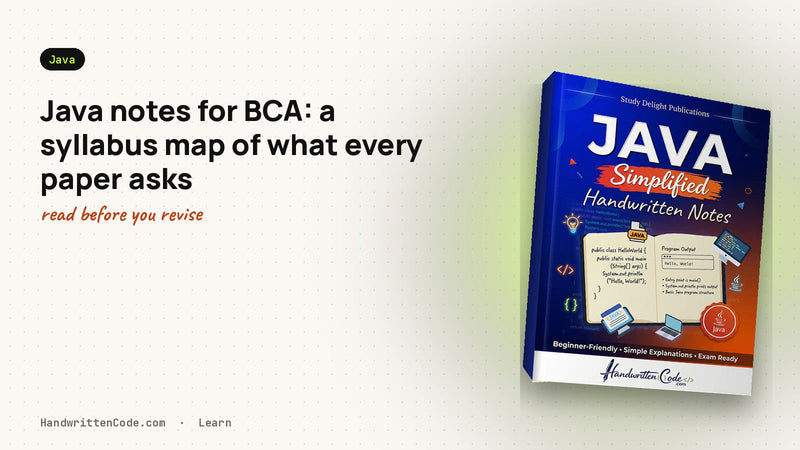
Java notes for BCA: a syllabus map of what every paper asks
BCA Java papers from different universities overlap by about 80%. This is the shared map — units, topics, the programs that repeat — so y...
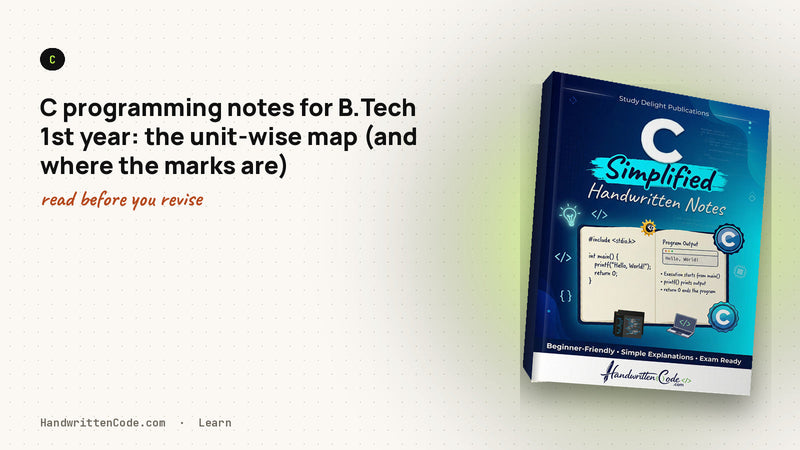
C programming notes for B.Tech 1st year: the unit-wise map (and where the marks are)
The first-year C paper is five units in almost every university. Here is what each unit contains, how many marks it carries, and the prog...
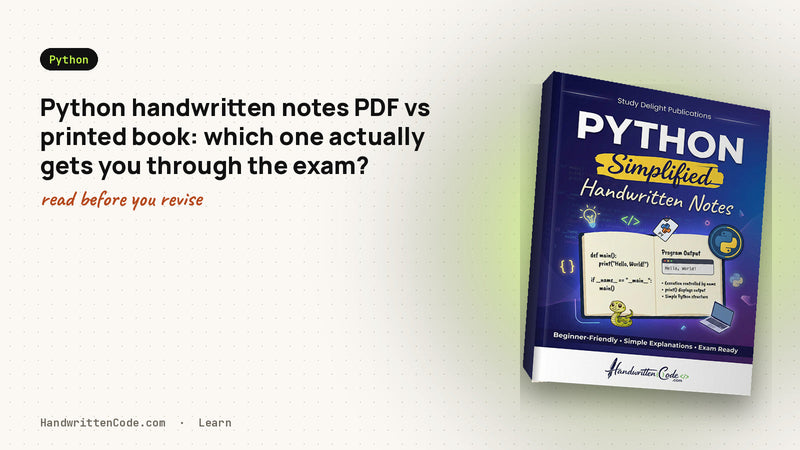
Python handwritten notes PDF vs printed book: which one actually gets you through the exam?
Everyone searches for a Python handwritten notes PDF the week before the paper. Here is what a PDF gives you, what it doesn't, and how to...
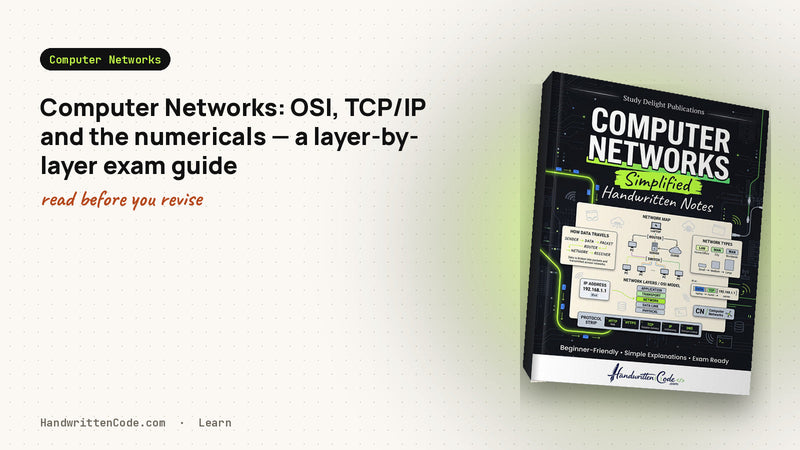
Computer Networks: OSI, TCP/IP and the numericals — a layer-by-layer exam guide
Networks is a theory paper with a few high-value numericals. Here is what each layer contributes to the question paper.
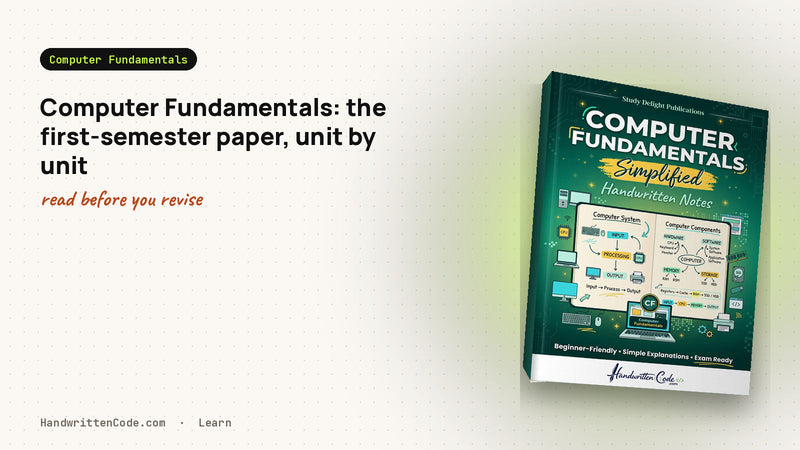
Computer Fundamentals: the first-semester paper, unit by unit
Number systems, hardware, software, memory, networks basics — the fundamentals paper is wide but shallow. Here is exactly what each unit ...
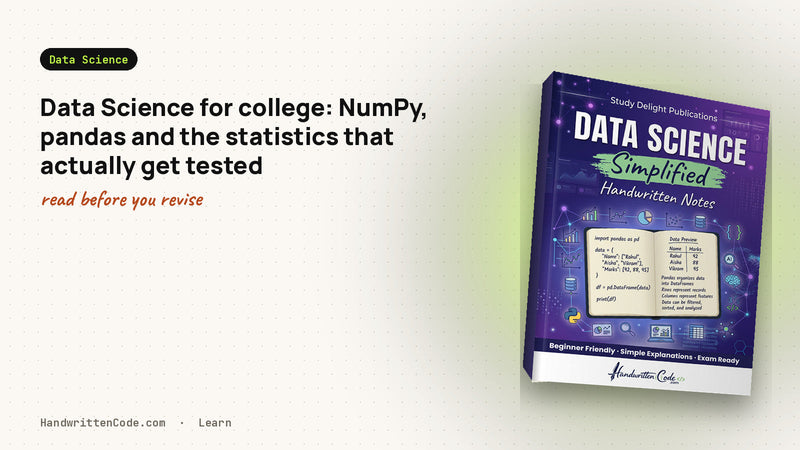
Data Science for college: NumPy, pandas and the statistics that actually get tested
The data-science elective is 40% statistics, 40% Python libraries, 20% ML vocabulary. Here is each part in exam order.
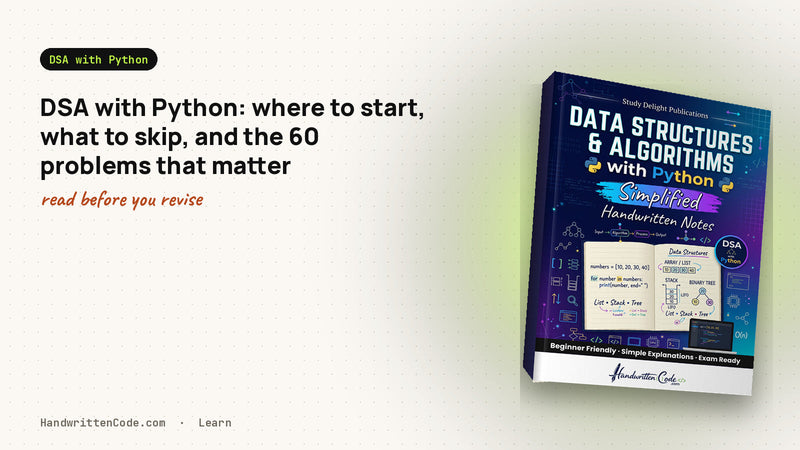
DSA with Python: where to start, what to skip, and the 60 problems that matter
Python makes data structures short to write and easy to misunderstand. Here is the order that builds real understanding.